
Summer in the UK brings more opportunities for children to enjoy the outdoors, but it also means a greater chance of insect encounters, which can lead to bites and stings.
Most of these cause nothing more than localised discomfort that settles within a few days. But some reactions require prompt medical assessment, and tick bites in particular need careful monitoring for signs of Lyme disease.
This guide covers what to do with the most common insect bites and stings in children, how to recognise when a reaction is serious, and what signs after a tick bite warrant a paediatric review.
Insect Bites in Children: What to Look For and What to Do
Insect bites in children are extremely common in summer, particularly during outdoor activities. They are caused by mosquitoes, fleas, midges, bed bugs, mites and spiders, among others. Most cause a small, itchy, local reaction that settles without treatment.
What Do Insect Bites Look Like in Children?
Typical features of insect bites in children include:
- Small red bumps (papules) with a visible central puncture mark
- Itchy skin, often intense
- Bites occurring in clusters, crops or lines
- Swelling around the bite
- Bites on exposed areas: arms, legs, face and neck
Some children develop a stronger reaction to proteins in insect saliva, producing larger, more swollen bumps with intense itching and localised warmth. Mosquito bites in children can produce particularly pronounced reactions in younger children who have not yet built up tolerance.Scratching insect bites breaks the skin and significantly increases the risk of a secondary bacterial skin infection. If bites become crusted, oozing or increasingly red and painful, this suggests the skin may have become infected and requires medical assessment.
How Long Do Insect Bites Last in Children?
Most insect bites in children improve within a few days. Itching may persist for up to a week after the bite. Larger local reactions can take one to two weeks to settle fully. Darker or lighter marks at the bite site may remain temporarily, particularly in children with darker skin tones.
How to Treat Insect Bites in Children at Home
- Wash the bite area gently with soap and water to reduce the risk of infection
- Apply a cool compress for 10 to 15 minutes at a time to reduce swelling and relieve itching
- Keep the skin moisturised if it becomes dry or irritated
- Encourage your child not to scratch
- A mild hydrocortisone cream can help reduce inflammation and itch
- Oral antihistamines may help with itching, particularly overnight
- Paracetamol or ibuprofen at the appropriate dose if the bite is painful
How to Prevent Insect Bites in Children
Preventing insect bites in children is largely about a few consistent habits rather than any single product or measure. The following approaches work well together during UK summers, particularly when spending time outdoors in parks, woodland or the countryside.
Use an age-appropriate insect repellent
Insect repellents are one of the most effective tools for reducing bites, but the right choice depends on your child’s age. Always read the product instructions carefully, as recommended ages and concentrations vary between products.
For babies over two months and young children, repellents containing 10 percent DEET or 10 percent picaridin are generally safe when used as directed. Picaridin is odourless and tends to feel less sticky on the skin, which younger children may tolerate better. Products containing oil of lemon eucalyptus (OLE) or para-menthane-diol (PMD) should not be used in children under three years of age.
A few practical points worth knowing:
- Apply a thin, even layer to exposed skin only. More does not mean better protection and can increase the chance of skin irritation
- Do not apply repellent to cuts, irritated skin, or around the eyes or mouth
- For young children, do not apply directly to their hands as they may touch their face
- Spray repellents should be sprayed onto your own hands first and then applied carefully to the child
- If you are also using sunscreen, apply that first, allow it to absorb, and then apply the repellent
- Wash repellent off with soap and water when you come indoors
Dress for the outdoors
When spending time in grassy or wooded areas, dressing your child in long sleeves, trousers and socks significantly reduces exposed skin. Light-coloured clothing is worth choosing when tick exposure is a possibility, as ticks are easier to spot against a pale background. Tucking trouser legs into socks when walking through long grass or woodland is a simple and effective precaution.
Reduce exposure where possible
Mosquitoes breed in standing water, so garden ponds, uncovered water butts and stagnant containers are worth managing during summer. Keep windows and doors screened where possible during warm evenings, when mosquitoes and midges tend to be most active. When picnicking, be aware that insects are drawn to flowering plants, bins and sugary drinks.
Check for ticks after every outdoor visit
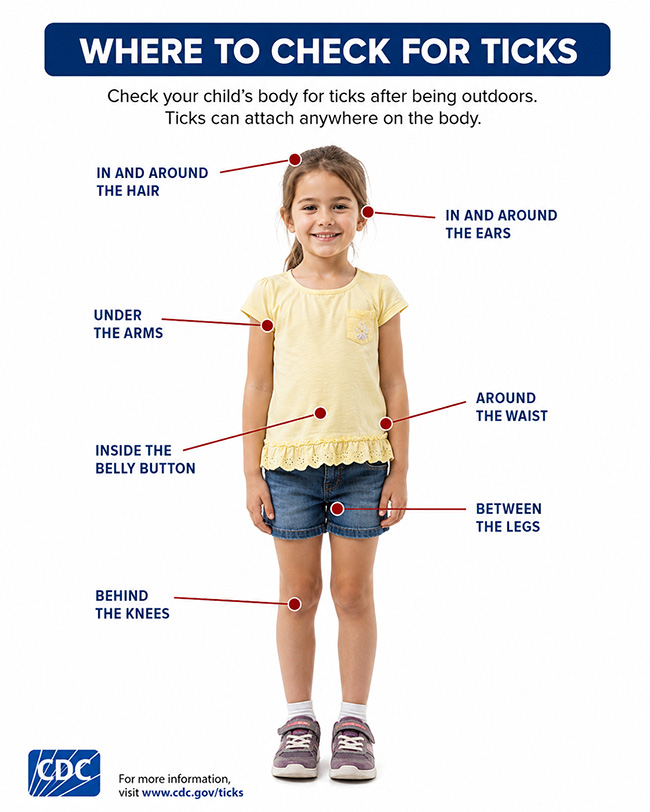
After any time spent in long grass or woodland, check your child’s skin and clothing carefully before coming back inside. Ticks are small and can be very easy to miss. Pay particular attention to the scalp, behind the ears, the neck, armpits, groin and behind the knees. Check again once you are home, as ticks can take a little time to find their attachment site.
When Should You Seek Medical Advice for an Insect Bite?
See a doctor or paediatrician if the bite:
- Is becoming increasingly red, warm, swollen or painful rather than improving
- Develops pus, crusting or a spreading area of redness suggesting infection
- Is causing significant swelling that is not settling
- Is accompanied by fever or your child appears unwell
- Is not improving after several days despite home treatment
| Call 999 immediately if your child develops signs of a severe allergic reaction (anaphylaxis) after an insect bite: difficulty breathing, wheezing, swelling of the lips or throat, dizziness, collapse, or widespread hives with breathing difficulties. This is a medical emergency. |
Bee and Wasp Stings in Children: What to Do
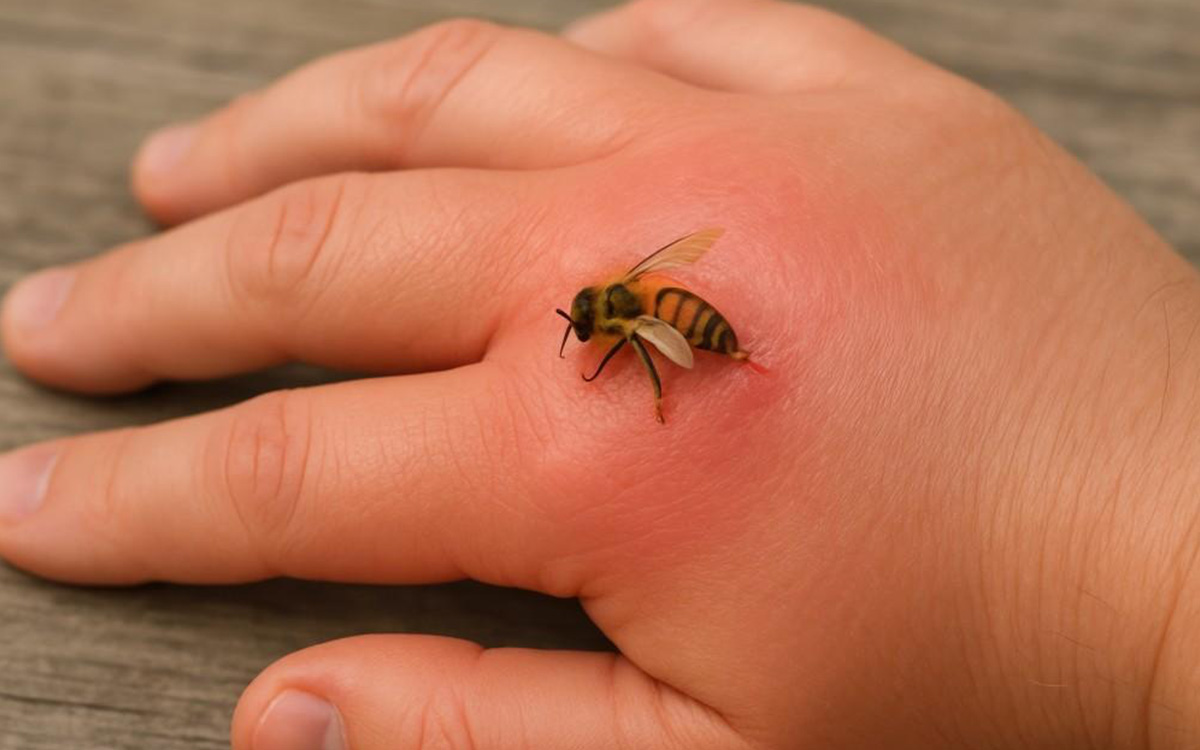
Bee and wasp stings in children are a common summer presentation. The sting causes an immediate skin reaction at the site that is usually manageable at home, but it is important to know the signs of a more serious allergic reaction.
What Does a Bee or Wasp Sting Look Like?
Common features immediately after a bee sting or wasp sting include:
- Immediate sharp pain at the sting site, usually lasting a few seconds
- Redness, swelling and tenderness around the sting
- Swelling that may continue to increase over the first 24 to 48 hours before gradually settling
- Itching as the initial pain subsides
Most local reactions from bee stings and wasp stings in children settle within a few days without any specific treatment beyond basic first aid.
How to Treat a Bee Sting in a Child
For a bee sting in a child, the stinger may be visible in the skin and should be removed as promptly as possible, as it can continue to release venom for several minutes after the sting.
- Remove the stinger by brushing or scraping it sideways using the edge of a card, a fingernail or the blunt edge of a knife. Avoid squeezing it if possible
- Wasps do not usually leave a stinger behind, so this step is not usually necessary for a wasp sting in a child
- Wash the area gently with soap and water
- Apply a cool compress or ice pack wrapped in a cloth for 10 to 15 minutes
- Elevate the affected limb if swollen
- Paracetamol or ibuprofen may help with pain at the appropriate dose
- Antihistamines can reduce itching and may help with swelling
- A mild topical steroid cream may reduce redness and inflammation
When to Seek Medical Advice After a Sting
- Swelling is severe or continues to worsen after 48 hours
- The sting is near the eye or inside the mouth or throat
- Signs of skin infection develop such as increasing redness, warmth or pus
- Symptoms are not improving after several days
- Your child has had a previous allergic reaction to a sting
Bee Sting Allergic Reaction in Children
Some children develop an allergic reaction to bee or wasp venom. This can range from a larger than usual local reaction to a severe whole-body allergic reaction known as anaphylaxis.A large local reaction involves swelling that spreads significantly beyond the sting site and may take several days to settle. This is not anaphylaxis but warrants medical review if extensive.
| A severe allergic reaction to a bee or wasp sting (anaphylaxis) is a medical emergency. Call 999 immediately if your child develops any of the following after a sting: widespread rash or hives, wheezing or difficulty breathing, swelling of the lips, tongue or throat, hoarse voice or difficulty swallowing, dizziness or collapse, pale skin and floppiness in younger children, or severe abdominal pain with repeated vomiting. |
If your child has had a significant allergic reaction to a sting in the past, a paediatric allergy assessment is recommended to assess the risk of a future reaction and discuss whether an adrenaline auto-injector (such as an EpiPen) is appropriate.
Tick Bites in Children and Lyme Disease: What Every Parent Should Know
Tick bites in children are increasingly common in the UK as families spend more time in parks, woodlands and the countryside during summer. Most tick bites are harmless, but ticks can occasionally transmit infections, most notably Lyme disease, and knowing what to watch for after a tick bite can make a significant difference to outcomes.
What Do Ticks Look Like and Where Are They Found?
Ticks are small blood-sucking parasites, roughly the size of a poppy seed before feeding and expanding to the size of a small grape once full. They are most commonly found in:
- Woodland, heathland and long grass
- Parks and countryside areas, including many green spaces in and around London
- Areas frequented by deer, sheep or other wildlife
Ticks are most active in the UK from spring through to autumn, with peak activity in summer. They cannot jump or fly but transfer to skin by brushing against vegetation. They most commonly attach in warm, hidden areas: the scalp, behind the ears, the neck, armpits, groin and behind the knees.
What Does a Tick Bite Look Like in a Child?
A tick bite may be painless and go unnoticed, particularly in younger children. Within one to three days of attachment, the bite site may show:
- A small bump of approximately 0.5 to 2 centimetres
- Redness and mild swelling around the attachment site
- Mild to moderate itching
- Occasionally a small blister
The tick itself may still be attached when you notice the bite. It is important to remove it promptly and correctly.
How to Remove a Tick from a Child Safely
Prompt and correct tick removal reduces the risk of infection transmission significantly. Use a tick removal tool (available from pharmacies and outdoor shops) or fine-tipped tweezers.
- Grasp the tick as close to the skin as possible
- Pull upward with slow, steady pressure. Do not twist or jerk
- Do not squeeze the tick’s body as this may force its contents into the skin
- Clean the bite area thoroughly with soap and water after removal
- Photograph the bite site and note the date of the bite
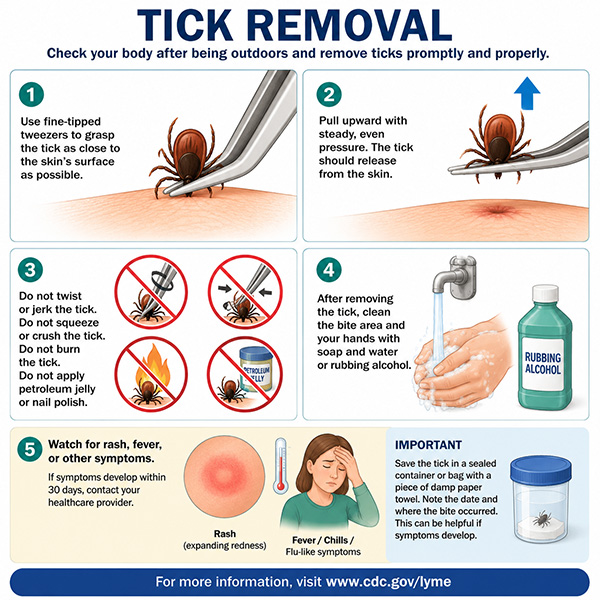
Important: Do not attempt to remove a tick by burning it, covering it in petroleum jelly, nail polish or oils. These methods can cause the tick to release its contents into the skin and may increase the risk of infection transmission.
What Is Lyme Disease in Children?
Lyme disease in children is caused by Borrelia bacteria transmitted through the bite of an infected tick. Not all ticks carry the bacteria and not every bite from an infected tick results in infection.
Lyme disease can affect multiple body systems including the skin, nervous system, joints and heart. Early recognition and treatment with antibiotics generally lead to full recovery.
Signs of Lyme Disease in Children: What to Watch For
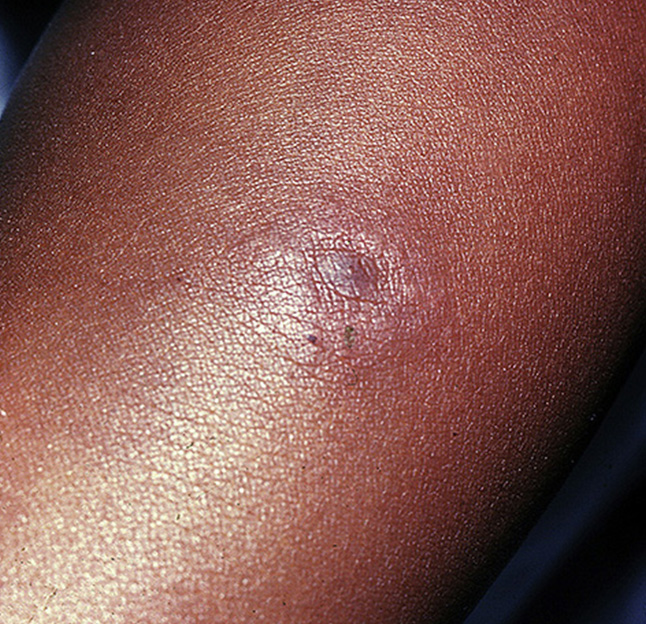
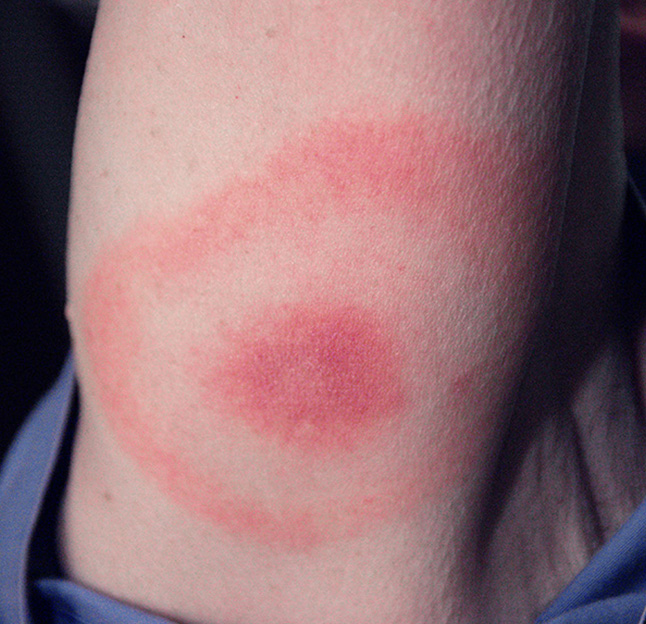
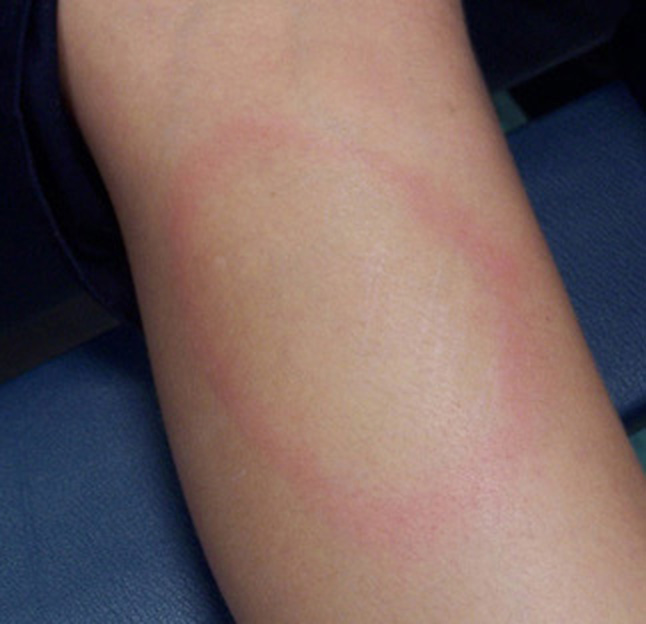
Erythema migrans: the characteristic Lyme disease rash — The most recognisable early sign of Lyme disease in children is erythema migrans, which occurs in approximately 70 to 80 percent of cases. It typically appears one to two weeks after a tick bite, though it can develop anywhere from three days to a month later.
Features of the erythema migrans rash include:
- Begins as a small red spot at the tick bite site
- Gradually expands over days to weeks, sometimes reaching 20 – 30 centimetres in diameter
- Often forms a classic bull’s-eye appearance with a central red area, a ring of normal skin and an outer expanding red ring
- Does not always look like a bull’s-eye. It may appear as a uniformly red or purple expanding patch
- Usually not painful, but may be mildly itchy and warm to touch
| Not all Lyme disease rashes look like a bull’s-eye. Any expanding red rash appearing one to four weeks after a tick bite in a child who has been outdoors in a wooded or grassy area should be assessed by a clinician promptly. |
Early Lyme disease may also cause flu-like symptoms alongside or instead of the rash, including:
- Fatigue and tiredness
- Low-grade fever and chills
- Headache and muscle aches
- Joint pain
- Swollen lymph glands near the bite site
Signs of Lyme Disease Spreading in a Child
If Lyme disease is not recognised and treated early, the bacteria can spread beyond the original bite site, causing more widespread symptoms. In children, the most common signs of spreading infection include:
- Facial palsy: weakness or paralysis affecting one side of the face, one of the most common neurological features of Lyme disease in children
- Joint swelling, most often affecting the knee
- Severe headache with neck stiffness
- Multiple erythema migrans patches appearing in different areas of the body
- Heart rhythm irregularities, palpitations or dizziness
These symptoms require prompt medical assessment. Early treatment with antibiotics is highly effective and most children with Lyme disease treated at this stage recover fully.
How to Prevent Tick Bites in Children
- Wear long sleeves and trousers when walking in woodland, heathland or long grass
- Tuck trouser legs into socks when hiking
- Stay on clear paths where possible
- Use an age-appropriate insect repellent, particularly on legs and ankles
- After outdoor activities, check children thoroughly for attached ticks. Pay particular attention to the scalp, behind the ears, the neck, armpits, groin and behind the knees
- Remove any attached ticks as soon as they are discovered
When to See a Paediatrician About Bites or Stings
Most insect bites, bee stings and wasp stings in children can be managed safely at home. However, arrange a paediatric review if:
- A bite or sting is becoming infected despite home treatment
- Swelling from a sting is extensive, worsening after 48 hours or affecting the face, mouth or throat
- An expanding rash develops one to four weeks after a tick bite
- Your child develops flu-like symptoms, joint swelling or facial weakness after a tick bite
- Your child has had a previous allergic reaction to a sting
- You are unsure whether a rash is from a bite, sting, tick or another cause
- Your child is a baby or young infant and you are concerned
A private paediatric consultation can provide prompt clinical assessment without a long wait, clear guidance on whether further investigation or treatment is needed, and referral for allergy assessment or specialist input where appropriate.
Bites, Stings and Tick Bites in Children: Frequently Asked Questions
An infected insect bite in a child typically shows increasing rather than improving redness, warmth, swelling and pain around the bite site. You may notice pus, crusting or a spreading area of redness. Your child may develop a fever or appear unwell. If you see any of these signs, seek medical advice promptly.
A normal local reaction involves pain, redness and swelling at the sting site that may worsen over the first 24 to 48 hours before gradually improving. A large local reaction involves significant swelling spreading well beyond the sting site. An allergic reaction (anaphylaxis) involves symptoms beyond the skin: breathing difficulties, throat swelling, dizziness or collapse. Anaphylaxis requires immediate emergency treatment. Call 999.
Yes, this should be assessed by a clinician promptly. An expanding red rash appearing one to four weeks after a tick bite may be erythema migrans, the characteristic early sign of Lyme disease. It does not always look like a classic bull’s-eye and can appear as a uniformly red or purple expanding patch. Take a photograph of the rash and note when it appeared, then seek medical review the same day.
If part of the tick remains in the skin after removal, do not attempt to dig it out. Small retained mouth parts typically work their way out on their own within a few days without causing further problems. Keep the area clean. What matters most is monitoring the bite site for the development of an expanding rash or flu-like symptoms in the weeks following the bite.
Lyme disease cases in the UK are increasing. There were 1,156 laboratory confirmed cases in England and Wales in 2021. High-risk areas include wooded and grassy areas across England, Scotland and Wales, but tick bites can occur in urban parks and gardens as well as in the countryside. Any child who has been in a grassy or wooded area and develops an expanding rash or flu-like illness in the weeks that follow should be assessed for Lyme disease.
Antibiotics are not routinely recommended after a simple tick bite without symptoms. They are prescribed when there is clinical evidence of Lyme disease, such as an erythema migrans rash or systemic symptoms. If you are concerned after a tick bite, a paediatric review can help assess whether treatment is needed.
| If your child has been stung, bitten or has had a tick bite and you are unsure what to do next, I am here to help. Appointments are available at clinics across London including Canary Wharf, Battersea and Holborn, and online. You can find out more on the How Appointments Work page or request a consultation directly. |
Disclaimer
The content on this blog is written by Dr Emanuela Manea, Consultant Paediatrician, and is intended to provide general health information for parents and carers. It does not constitute medical advice and should not be used to diagnose, treat or manage any medical condition. Every child is different, and clinical findings and treatment decisions should always be made in the context of an individual assessment by a qualified healthcare professional. If you have concerns about your child’s health, please seek appropriate medical advice promptly. If your child is seriously unwell, call 999 or go to your nearest emergency department.
